
A term plan's premium is lower than that of a wholelife plan.

Let's wait for the monetary policy on February 8 -- to see how it complements the fiscal commitments, points out Tamal Bandyopadhyay.

The Madras high court has ordered the winding up of private carrier SpiceJet Limited and directed the official Liquidator attached to the high court to take over its assets, in a plea filed by a Swiss company over unpaid dues. The court was allowing a company petition from Credit Suisse AG, a stock corporation registered under the laws of Switzerland, which prayed for winding up of the Indian firm under the provisions of the Companies Act, 1956 and appoint the Official Liquidator of the high court as the liquidator with all powers under Section 448 of the Companies Act to take charge of SpiceJet's assets, properties, stock in trade and books of accounts. The "respondent company (SpiceJet) has miserably failed to satisfy the three pronged test suggested by the Supreme Court in Mathusudan Govardhandas & Co v Madhu Woollen Industries (P) Ltd, and hence had rendered itself liable to be wound up for its inability to pay its debts under Section 433 (e) of the Companies Act 1956," Justice R Subramanian said in his order on Monday and directed the private carrier be wound up and the official liquidator take over its assets.

Due to tax associations with the fiscal-ending, April is a month of SIP renewal. So, the April numbers will be important and may perhaps, mark a change in retail attitude.

The RBI governor is focused on growth, and keeping rupee slightly depreciated is part of that 'Atmanirbhar Bharat' strategy.

Equity MF schemes recorded worst inflows in three and a half years at Rs 1,311 crore for November. Investors across the board have taken money off the table as markets have scaled new highs. Industry experts said SIPs had stayed intact, which is a healthy sign for the MF industry.

While equity savings funds could offer higher returns over three-five years, they would also be more volatile.

After the Franklin Templeton episode, investor confidence has been shaken. Known brands have become more relevant to investors, as long as this psychological impact lasts.

Vodafone Idea (Vi) is in continuous talks with network vendors to finalise its 5G rollout plans, Vodafone Idea CEO Akshaya Moondra said. "We are in early stages of 5G deployment. "5G is an important development and we are keeping our eyes on it," Moondra said on Wednesday in a post-result analyst call. Already five months behind rivals Jio and Airtel in the 5G race, Vi's efforts will be on the deployment of 5G in target geographies.

Overseas investors had put in a net sum of Rs 45,981 crore in March and Rs 11,182 crore in February in the capital markets

'My wife, family members as well as members of the workers will be trustees.' 'The trust will take all decisions -- no family member can individually take any decision.'
In October, the contribution through SIPs rose to Rs 79.85 billion, up 42% compared to the same month last year.

SBI Funds Management (SBI MF) will distribute the fifth tranche of Rs 3,303 crore to unitholders of Franklin Templeton Mutual Fund's six shuttered schemes during the week beginning Monday. With this, the total disbursement will reach Rs 21,080 crore, amounting to 84 per cent of assets under management (AUM) as on April 23, 2020, a Franklin Templeton MF spokesperson said on Sunday. Under the first disbursement in February, investors received Rs 9,122 crore, while Rs 2,962 crore were paid to investors during the week of April 12, Rs 2,489 crore during the week of May 3 and in the latest disbursement during the week of June 7, investors were paid Rs 3,205 crore.

Debt funds typically held 0-5 per cent of their portfolio in cash and cash equivalents before this Sebi diktat.

Select the exact category by matching your investment horizon to the portfolio duration, suggests Sanjay Kumar Singh.

Equity mutual funds witnessed an outflow of Rs 9,253 crore in January, making it the seventh consecutive monthly withdrawal, primarily due to profit booking and portfolio rebalancing amid markets touching new highs. The pace of outflows from equities has however slowed for the third month and Gautam Kalia, head - Investment Solutions, Sharekhan by BNP Paribas said that it will likely turn positive soon as investors get used to the new normal. In addition, investors pulled out Rs 33,409 crore from debt mutual funds last month after investing Rs 13,863 crore in December, data from the Association of Mutual Funds in India showed on Tuesday.

The government's regional connectivity scheme UDAN has witnessed a slow progress of implementation, as not even 50 per cent of the route have been operationalised and the second wave of the pandemic, which started from mid of March 2021, may impact it further going forward, according to a report. Rating agency ICRA in its report on Tuesday said that there is likely to be a further delay of two years in achieving the target of operationalising as many as 100 unserved and underserved airports and starting at least 1,000 RCS routes by 2024. Aimed at enhancing regional connectivity through fiscal support and infrastructure development, the maiden flight under the Ude Desh Ka Aam Nagrik (UDAN) scheme was flagged off by Prime Minister Narendra Modi from Shimla for Delhi on April 27, 2017.

'Then select those that are well-aligned with your risk-return profile and investment time horizon.'

The Tata Tech IPO will be the first from the Tata group since TCS listed its shares in 2004.

Assets under management with the mutual fund industry jumped a whopping 41 per cent in fiscal 2021 to Rs 31.43 lakh crore, despite a minor 1 per cent decline in March, says a report. The 1 per cent decline in assets on monthly basis in March was because of net outflows from open-ended debt funds, even though open-ended equity funds for the first time in June 2020 recorded net inflows, according to the industry data collated by Crisil on Friday. Marc saw net outflows of Rs 29,745 crore, taking down the industry's asset base to Rs 31.43 lakh crore, down from the record high of Rs 31.64 lakh crore in February, registering a whopping 41 per cent growth in the fiscal 2021 over the previous fiscal, said Crisil, adding cumulative inflows equalled Rs 2.09 lakh crore.

The government is expected to defer the mega initial public offering (IPO) of LIC to the next financial year as the ongoing Russia-Ukraine war has dampened fund managers' interest in the public issue, market experts said on Sunday. The government was looking to sell 5 per cent stake in Life Insurance Corporation (LIC) this month, which could have fetched over Rs 60,000 crore to the exchequer. The IPO would have helped meet the curtailed divestment target of Rs 78,000 crore this fiscal.

One thing is for sure: It smacks of the regulator's lack of confidence in the bank's board, points out Tamal Bandyopadhyay.

'Nirmalaji must consider herself a very lucky finance minister, partly because of the government's response to covid and partly because we as a nation have done very well as an economy, post pandemic.'

IPO market hopes to come out of slump in festive season, reports Sundar Sethuraman.

The Securities and Exchange Board of India (Sebi) has introduced an optional T+1 settlement cycle for the markets. T+1 means that settlements will have to be cleared within one day of the actual transactions taking place. The regulator has put the onus on the stock exchanges to decide whether they want to opt for the shorter settlement cycle for any of the listed scrips. This can be done after giving a one-month prior notice to all stakeholders.

The rupee depreciated 39 paise to an all-time low of 82.69 against the US dollar in early trade on Monday as elevated crude oil prices and risk-averse sentiment among investors weighed on the local unit. Moreover, a negative trend in domestic equities and firm American currency sapped investor appetite, forex traders said. At the interbank foreign exchange, the rupee opened at 82.68 against the greenback, then slipped further to 82.69, registering a fall of 39 paise over its previous close.

Investors who issued units in liquid and overnight funds, as well as those with a short-term holding of less than 30 days, are likely to be impacted the most, say experts.

Despite strong AUM growth, MFs lag behind other popular investment avenues. MFs received only 6 per cent of total household savings in 2021-2022.

While lenders create a hype around the services offered on digital platforms, customers think otherwise, given that frustration due to the quality of service has only increased, over the years.

If net forex outflows turn out to be relatively high in the next few years, the rupee could depreciate beyond Rs 80 to a dollar by 2022. The causal reasons could, for example, include unmet expectations of FPI and FDI investors about the performance of the Indian economy, sharp rise in prices of imported oil and decrease in FX remittances. The RBI has to ask itself whether guaranteeing future rupee-dollar exchange rates on FX forward contracts is a reasonable way to use its risk-bearing capacity, says Jaimini Bhagwati.

Fresh capital raised by companies by way of initial public offerings (IPOs) is set to hit a 14-year high, thanks mainly to Zomato's maiden offering. India Inc has raised about Rs 19,300 crore in fresh capital by maiden offerings, including the Rs 9,000 crore the food delivery company will raise this week, so far in 2021. The best year in terms of fresh fund-raise was 2007, when companies had raised Rs 32,102 crore. With Paytm planning to issue fresh shares worth Rs 12,000 crore, the domestic market looks set to surpass that tally this year.

The Indian startup ecosystem recently celebrated the 100th unicorn milestone. It came after a month of no big fund announcements. Compare this to 2021, when three to four unicorns were being added every month. Nevertheless, the 100th unicorn needs to be celebrated since the first unicorn was announced in 2011 - 11 years ago.

'Returns can be very variable in equity markets.' 'That is why I tell small investors don't put 100 per cent of your money in equities, even if you are young.'

Trading volumes for the equities cash segment remained soft, even as the benchmark indices rallied nearly 9 per cent in July. Meanwhile, volumes in the futures and options (F&O) market dipped marginally, but continued to hover at record levels. In July, the average daily turnover (ADTV) for the cash segment was Rs 46,602 crore, up 4.5 per cent month-on-month (MoM), but 26 per cent lower than the preceding 12-month average.

SpiceJet, India's second-largest private airline, kicked off the process of hiving off its logistics business to its subsidiary SpiceXpress as it looks to raise much-needed capital. On Tuesday, the company sought its shareholders' approval to complete the process and to raise up to Rs 2,500 crore via a qualified institutions placement (QIP). It is in talks with multiple private equity investors as it tries to sell shares in the logistics arm to raise money.

Amit Shah's net worth grew 32 per cent to Rs 37.91 crore, mainly due to 80 per cent appreciation in the market value of his securities.

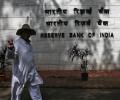
Reserve Bank Governor Shaktikanta Das on Monday said despite the latest headwinds arising from the Jackson Hole summit leading to extreme volatility, our banking system and financial markets are strong enough to withstand such pressures. Taking the markets by surprise, US Fed chair Jerome Powell had told the annual Jackson Hole summit of central bankers and economists last week that he would have to keep raising federal fund rates to tame inflation, which remains the biggest challenge to the world's largest economy. He also warned of the pains that such monetary policy actions would create on growth and jobs.

Uncertainties on account of COVID-19 pandemic have increased the demand for currency notes not only in India but across the globe, official sources said, dismissing the criticism that demonetisation has failed to reduce cash in the economy. Government sources said that growth of the digital payments system post-demonetisation will ultimately curb the dependence on cash. Official data points out a jump in digital payments through different modes, including plastic cards, net banking and Unified Payments Interface (UPI).

'Comparing the rates of interest with PSU banks, the three- and five-year time deposit rates of the post office are more favourable.'
Stemming from the default of IL&FS in September, on various debt instruments including commercial papers, bonds and loans, the financial sector has been facing a liquidity crunch for the last eight to ten weeks.
